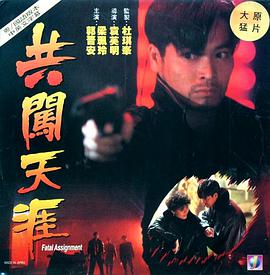
终极目标
10.0 |03月17日 |警校兄弟生死博弈
简介:

  Jake Lamar曾经是个好的警察。以NICK命名的波斯顿警察局以他的杰出谈判技巧为骄傲,现在Jake成为了他自己的影子。一个悲剧使他放弃了谈判家的工作,成为了新人培训员。
  一天早晨,Jake起床的时候在自己的房子里发现自己脸对脸地面对2个持枪的歹徒。因为他的聋哑女儿在楼上睡觉,Jake尽全力保持镇静面对危险的境地。他迅速地认识到2个歹徒并没有乱翻他的屋子,并且对钱并不感兴趣。绑架者对他很了解,并精心地策划这次行动很长时间了。当Jake尽力找出他们的真实目的时,一个心理对抗发生了。2歹徒慢慢地揭露了他们的意图,为了揭露一个政治阴谋,Jake是他们达到目的的钥匙,利用他的专门技能和警察的门路去揭露藏在阴谋后面,徘徊在这所城市的人。 Jake利用他的谈判技巧想要去解决这个事态,并不伤及任何人生命。紧张的情况逐渐升级当Jake不能说服绑架者停止他的行为,并且决定反击。因为他的女儿和无辜人的生命掌握在他的手上,Jake会尽自己所能去阻止2个匪徒。


猜你喜欢
换一换
巴斯克维尔猎犬
41
10.0
HD中字
巴斯克维尔猎犬
10.0
更新时间:2026年01月22日
主演:Peter Voß,Friedrich Kayßler,Alice Brandt,Bruno Güttner,Fritz Odemar,Fritz Rasp
简介:

  A most pleasingly atmospheric rendition of the tale, noirishly photographed and moodily set, this is the version which probably would have delighted Conan Doyle the most. There is one important plot change which enables the beautiful Alice Brandt to enjoy both a larger role and a more intriguing part in the proceedings. This change also builds up the parts of Dr Mortimer and Lord Charles, yet at the same time provides a nice introduction to the is-he-sinister or is-he-a-good-guy Barrymore, deftly played here by Fritz Rasp.
  Despite the sting of its well-developed story, the spellbindingly atmospheric direction and the engrossing performances delivered by the entire cast, many fans may find this version somewhat disappointing. For at least three reasons: As in the novel, the part played in the narrative by Sherlock Holmes, though vital, is minimal. And in this version, not only has no attempt been made to enlarge his role, if anything both writer and director do their best to minimize it. Holmes does not even make his entrance for half-an-hour, and when he does finally appear, he has his back to the camera. It is Fritz Odemar, as Dr Watson, who receives the more favorable camera angles. And there is a purpose in this. It is Watson, not Holmes, who figures as the main protagonist of The Hound of the Baskervilles. For the bulk of the narrative, Holmes disappears. It is Watson and Lord Henry (Peter Voss) who take up the running. The movie is almost over, before Holmes closes in on the villain. And even so, this is not the obsessed, self-important Holmes we are accustomed to see taking charge. Another problem is that the title hound itself does not figure a great deal in the action, a downgrading which will undoubtedly rate as another major disappointment for fans. And finally, it could be argued that the script gives too much attention to Conan Doyle's red herring, the escaped convict, and not enough to the real villain.
  This said, it must surely be admitted by all, that Odemar's interpretation of Watson—intelligent, charming, level-headed, courageous and resourceful—is much closer to Conan Doyle's conception than either the bungling, inveterately stupid Nigel Bruce or the self-effacing Ian Fleming.
  One other player deserves special mention: Erich Ponto (Dr Winkel in The Third Man) who seems exactly right for Stapleton. A difficult part, superbly played.
  - JohnHowardReid, imdb

8170
1937
巴斯克维尔猎犬
主演:Peter Voß,Friedrich Kayßler,Alice Brandt,Bruno Güttner,Fritz Odemar,Fritz Rasp
关于在短时间内的某几个人的经过
21
4.0
HD中字
关于在短时间内的某几个人的经过
4.0
更新时间:2026年01月22日
主演:未知
简介:

  Voice 1 (male "professional announcer" type): This neighborhood(1) was made for the wretched dignity of the petty bourgeoisie, for respectable occupations and intellectual tourism. The sedentary population of the upper floors was sheltered from the influences of the street. This neighborhood has remained the same. It was the strange setting of our story, where a systematic questioning of all the diversions and works of a society, a total critique of its idea of happiness, was expressed in acts.
  These people also scorned "subjective profundity". They were interested in nothing but an adequate and concrete expression of themselves.
  Voice 2 (Debord, monotone): Human beings are not fully conscious of their real life - usually groping in the dark; overwhelmed by the consequences of their acts; at every moment groups and individuals find themselves confronted with results they have not wished.
  Voice 1: They said that oblivion was their ruling passion. They wanted to reinvent everything each day; to become the masters and possessors of their own lives.
  Just as one does not judge a man according to the conception he has of himself, one cannot judge such periods of transition according to their own consciousness; on the contrary, one must explain the consciousness through the contradictions of material life, through the conflict between social conditions and the forces of social production.
  The progress achieved in the domination of nature was not yet matched by a corresponding liberation of everyday life. Youth passed away among the various controls of resignation.
  Our camera has captured for you a few aspects of a provisional microsociety.
  The knowledge of empirical facts remains abstract and superficial as long as it is not concretized by its integration into the whole "” which alone permits the supersession of partial and abstract problems so as to arrive at their concrete essence, and implicitly at their meaning.
  This group was on the margins of the economy. It tended toward a role of pure consumption, and first of all the free consumption of its time. It thus found itself directly engaged in qualitative variations of everyday life but deprived of any means to intervene in them.
  The group ranged over a very small area. The same times brought them back to the same places. No one went to bed early. Discussion on the meaning of all this continued...
  Voice 2: "Our life is a journey "” In the winter and the night. "” We seek our passage..."�
  Voice 1: The abandoned literature nevertheless exerted a delaying action on new affective formulations.
  Voice 2: There was the fatigue and the cold of the morning in this much-traversed labyrinth, like an enigma that we had to resolve. It was a looking-glass reality through which we had to discover the potential richness of reality.
  On the bank of the river evening began once again; and caresses; and the importance of a world without importance. Just as the eyes have a blurred vision of many things and can see only one clearly, so the will can strive only incompletely toward diverse objects and can completely love only one at a time.
  Voice 3 (young girl): No one counted on the future. It would never be possible to be together later, or anywhere else. There would never be a greater freedom.
  Voice 1: The refusal of time and of growing old automatically limited encounters in this narrow, contingent zone, where what was lacking was felt as irreparable. The extreme precariousness of the means of getting by without working was at the root of this impatience which made excesses necessary and breaks definitive.
  Voice 2: One never really contests an organization of existence without contesting all of that organization's forms of language.
  Voice 1: When freedom is practiced in a closed circle, it fades into a dream, becomes a mere representation of itself. The ambiance of play is by nature unstable. At any moment "ordinary life"� can prevail once again. The geographical limitation of play is even more striking than its temporal limitation. Any game takes place within the contours of its spatial domain. Around the neighborhood, around its fleeting and threatened immobility, stretched a half-known city where people met only by chance, losing their way forever.
  The girls who found their way there, because they were legally under the control of their families until the age of eighteen, were often recaptured by the defenders of that detestable institution. They were generally confined under the guard of those creatures who among all the bad products of a bad society are the most ugly and repugnant: nuns.
  What usually makes documentaries so easy to understand is the arbitrary limitation of their subject matter. They describe the atomization of social functions and the isolation of their products. One can, in contrast, envisage the entire complexity of a moment which is not resolved into a work, a moment whose movement indissolubly contains facts and values and whose meaning does not yet appear. The subject matter of the documentary would then be this confused totality.
  Voice 2: The era had arrived at a level of knowledge and technical means that made possible, and increasingly necessary, a direct construction of all aspects of a liberated affective and practical existence. The appearance of these superior means of action, still unused because of the delays in the project of liquidating the commodity economy, had already condemned aesthetic activity, whose ambitions and powers were both outdated. The decay of art and of all the values of former mores had formed our sociological background. The ruling class's monopoly over the instruments we needed to control in order to realize the collective art of our time had excluded us from a cultural production officially devoted to illustrating and repeating the past. An art film on this generation can only be a film on its absence of real creations.
  Everyone unthinkingly followed the paths learned once and for all, to their work and their home, to their predictable future. For them duty had already become a habit, and habit a duty. They did not see the deficiency of their city. They thought the deficiency of their life was natural. We wanted to break out of this conditioning, in quest of another use of the urban landscape, in quest of new passions. The atmosphere of a few places gave us intimations of the future powers of an architecture it would be necessary to create to be the support and framework for less mediocre games. We could expect nothing of anything we had not ourselves altered. The urban environment proclaimed the orders and tastes of the ruling society just as violently as the newspapers. It is man who makes the unity of the world, but man has extended himself everywhere. People can see nothing around them that is not their own image; everything speaks to them of themselves. Their very landscape is alive. There were obstacles everywhere. There was a cohesion in the obstacles of all types. They maintained the coherent reign of poverty. Everything being connected, it was necessary to change everything by a unitary struggle, or nothing. It was necessary to link up with the masses, but we were surrounded by sleep.
  Voice 3: The dictatorship of the proletariat is a desperate struggle, bloody and bloodless, violent and peaceful, military and economic, educational and administrative, against the forces and traditions of the old world.
  Voice 1: In this country it is once again the men of order who have rebelled. They have reinforced their power. They have been able to aggravate the grotesqueness of the ruling conditions according to their will. They have embellished their system with the funereal ceremonies of the past.
  Voice 2: Years, like a single instant prolonged to this point, come to an end.
  Voice 1: What was directly lived reappears frozen in the distance, fit into the tastes and illusions of an era, carried away with it.
  Voice 2: The appearance of events that we have not made, that others have made against us, now obliges us to be aware of the passage of time, its results, the transformation of our own desires into events. What differentiates the past from the present is precisely its out-of-reach objectivity; there is no more should-be; being is so consumed that it has ceased to exist. The details are already lost in the dust of time. Who was afraid of life, afraid of the night, afraid of being taken, afraid of being kept?
  Voice 3: What should be abolished continues, and we continue to wear away with it. We are engulfed. We are separated. The years pass and we haven't changed anything.
  Voice 2: Once again morning in the same streets. Once again the fatigue of so many similarly passed nights. It is a walk that has lasted a long time.
  Voice 1: Really hard to drink more.
  Voice 2: Of course one might make a film of it. But even if such a film succeeds in being as fundamentally disconnected and unsatisfying as the reality it deals with, it will never be more than a re-creation "” poor and false like this botched traveling shot.
  Voice 3: There are now people who pride themselves on being authors of films, as others were authors of novels. They are even more backward than the novelists because they are unaware of the decomposition and exhaustion of individual expression in our time, ignorant of the end of the arts of passivity. They are praised for their sincerity since they dramatize, with more personal depth, the conventions of which their life consists. There is talk of the liberation of the cinema. But what does it matter to us if one more art is liberated through which Tom, Dick or Harry can joyously express their slavish sentiments? The only interesting venture is the liberation of everyday life, not only in the perspectives of history but for us and right away. This entails the withering away of alienated forms of communication. The cinema, too, has to be destroyed.
  Voice 2: In the final analysis, stars are created by the need we have for them, and not by their talent or lack of talent or even by the film industry or advertising. Miserable need, dismal, anonymous life that would like to expand itself to the dimensions of cinema life. The imaginary life on the screen is the product of this real need. The star is the projection of this need.
  The images of the advertisements during the intermissions are more suited than any others for evoking an intermission of life.
  To really describe this era it would no doubt be necessary to show many other things. But what would be the point?
  Better to grasp the totality of what has been done and what remains to be done than to add more ruins to the old world of the spectacle and of memories.
  1. This film, which evokes the lettrist experiences at the origin of the situationist movement, opens with shots of the Paris district frequented by the lettrists in the early 1950s.

332
1959
关于在短时间内的某几个人的经过
主演:
眠狂四郎元月斩
87
2.0
HD中字
眠狂四郎元月斩
2.0
更新时间:2026年01月22日
主演:市川雷藏,东良之助,伊达三郎,藤川准,滨田优子,原圣四郎,堀北幸夫,岩田正,菊野昌代志,木村元,南条新太郎,冲时男,佐佐木孝丸,玉置一惠,植村谦二郎
简介:

  将軍家斉の庶子片桐高之は、母松女の野望に駆り立てられ次期将軍の座を狙っていた。ある日高之は新刀の試斬りに川原で飢饉で地方から避難して来た百姓の老人を斬り殺した。ちょうどそこを通りかかった狂四郎は、それを目撃するが、老人の仲間からは誤解されて憎しみを受け、また高之からも狙われることになった。そんな狂四郎はある日、高之の使の腰元小波の迎えを受け川舟へ案内された。そこで狂四郎は仕官をすすめられ、さらに愛刀無想正宗を所望されたが、狂四郎はこれを拒絶し、高之側近の剣客戸田の右腕を斬り落して立去った。小波は豪商山崎屋伝右衛門の娘で、伝右衛門は小波に未来の将軍御台所の夢を托し、高之に経済的な援助を与えていた。そんな小波を高之も愛し、妻に迎える約束を交していた。一方狂四郎は高之の邸に忍び入り、小波を寝室に襲って犯した。憎悪に燃える小波は片桐家に恩義をこうむる剣客寄居勘兵衛を狂四郎の許へ送った。しかし狂四郎は勘兵衛の人物を惜しみながらもこれを斬り倒した。さらに高之は死刑囚むささびの伴蔵を釈放して狂四郎を倒そうとした。伴蔵の手裏剣と高之配下の剣士たちの殺陣をきり抜けた狂四郎は、そこで憎悪に燃えた小波を見た。一方高之のために試斬りにされた老人の忰太十は、復讐のために小波をさらったが、それを知った高之のために逆に捕われの身となってしまった。駆けつけた狂四郎は太十の命と引換えに無想正宗を高之に与え、自ら捕われの身となった。しかし狂四郎を憎みながらも女として愛すようになっていた小波に刀をもらった狂四郎は牢を脱出して向柳原の橋上で高之と対決した。狂四郎の剣が円を描き、その足下に高之はくずれ落ちた。

1190
1964
眠狂四郎元月斩
主演:市川雷藏,东良之助,伊达三郎,藤川准,滨田优子,原圣四郎,堀北幸夫,岩田正,菊野昌代志,木村元,南条新太郎,冲时男,佐佐木孝丸,玉置一惠,植村谦二郎
世界奇妙物语 2017年秋季特别篇
65
9.0
HD中字版
世界奇妙物语 2017年秋季特别篇
9.0
更新时间:2026年01月22日
主演:岩田刚典,石桥杏奈,浅香航大,玄理,吉冈里帆,峯田和伸,大后寿寿花,田中真琴,中山美穗,浅利阳介,藤原龙也,饭丰万理江,小市慢太郎
简介:  《寺岛》:刚刚拿到第一个连载的漫画家山崎(峯田和伸 饰),因为助手突然走掉而疲于奔命。某个下雨的日子,自称寺岛的女子(吉冈里帆 饰)前来担任助手职务。作为创作素材,寺岛向漫画家讲述了一个可怕的故事。
  《Freestyle妈妈》:人过中年的主妇细川房子(中山美穗 饰)在生活、职场中充满不快,某晚下班时一个奇怪男子推荐给她一支神秘口红。突然口红后,她就会以说唱的方式把心中不满一吐为快。
  《命运探测器》:完全不相信命运和缘分的和泉凉平(岩田刚典 饰)至今单身,某天他捡到一块奇怪的手表,谁知这竟是一个命运探测器。此后,探测器一次次将他带到美丽女孩北泽由纪(石桥杏奈 饰)的身边。
  《夜之声》:大型IT公司总裁我堀英一(藤原龙也 饰)人前风光,私下里则时长办成流浪汉减压。某晚,他救下了被坏人追逐的少女百合(饭丰万理江 饰)。百合从此暂住流浪汉家中,流浪汉介绍她到自己的公司应聘,然而少女却爱上了流浪汉。
1242
2017
世界奇妙物语 2017年秋季特别篇
主演:岩田刚典,石桥杏奈,浅香航大,玄理,吉冈里帆,峯田和伸,大后寿寿花,田中真琴,中山美穗,浅利阳介,藤原龙也,饭丰万理江,小市慢太郎
评论区
首页
TV动画
剧场版
电影
电视剧
短剧